
Construction Loans Explained: How Financing a New Build Actually Works
Building a home is a different kind of property journey. Instead of paying for a finished property at settlement, the cost of the build unfolds over time — from the land and building contract through to foundations, framing, fit-out and completion. The finance is designed to follow that same rhythm.
That is where a construction loan differs from a standard home loan. Rather than releasing the full approved construction amount at once, the lender generally makes a series of progress payments as agreed stages of the build are completed. During the construction period, interest is typically charged only on the amount that has actually been drawn.
The process can look more complicated on paper because there are builders, contracts, valuations, invoices and lender requirements involved. But once you understand how the pieces connect, it becomes much easier to see what needs to happen next.
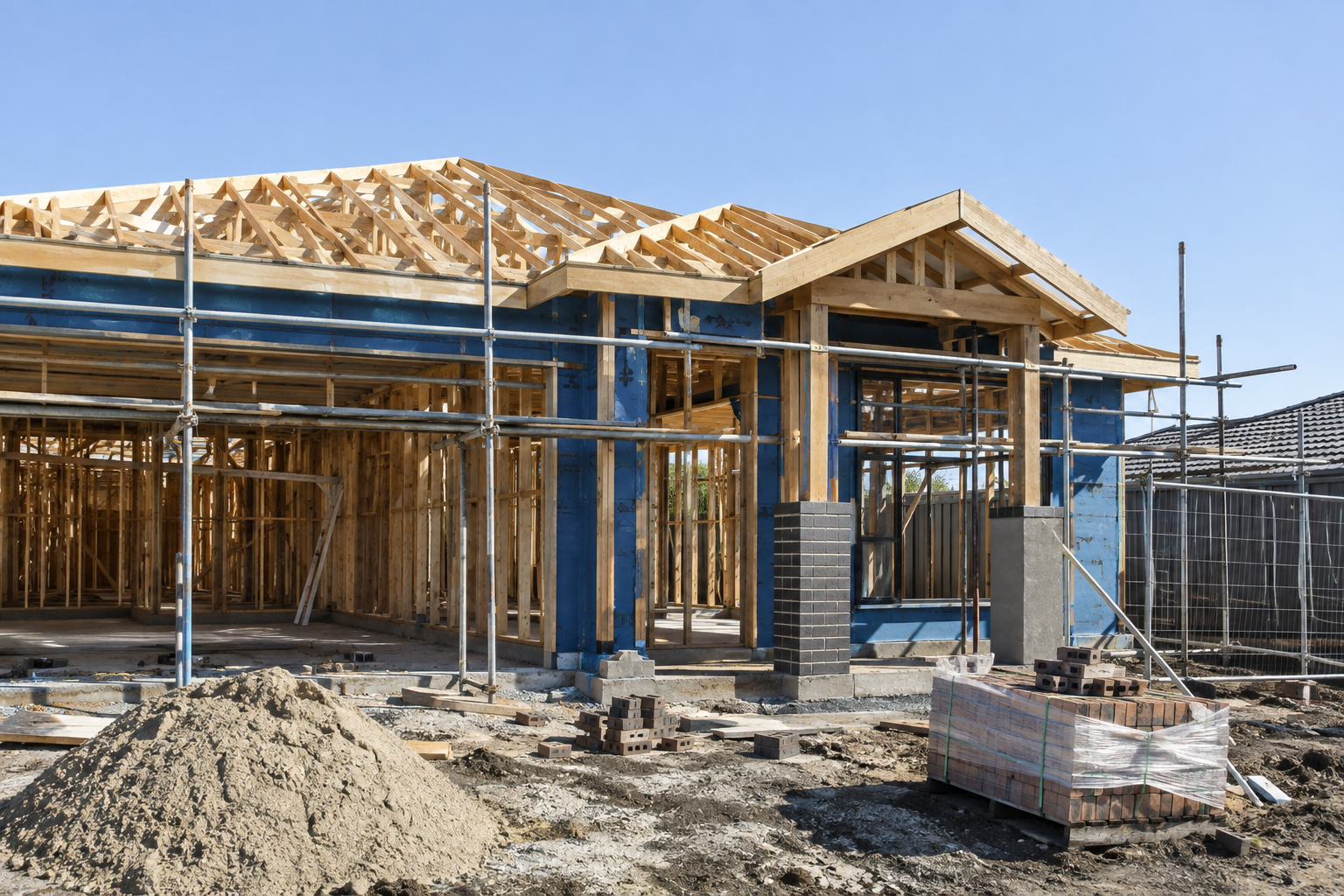
A construction loan releases funds progressively
With an ordinary purchase, most of the loan is advanced at settlement. With a construction loan, the construction portion is progressively drawn as the property takes shape. Your building contract will usually include a progress payment schedule that sets out when the builder expects payment for each stage.
The exact stages depend on the contract and lender, but a build commonly moves through milestones such as slab or base, frame, lock-up, fixing and completion. Some lenders describe a typical schedule as five or six progress payments. The important point is that the lender is funding completed work rather than handing over the entire construction budget on day one.
The lender will want to understand the finished property before construction begins
Before approving construction finance, a lender will generally need more than your income and deposit information. It may ask for the signed building contract, approved plans and specifications, quotes or cost details, council or building approvals where applicable, and evidence of the funds you are contributing.
A valuation is also commonly arranged on an 'as if complete' basis. In other words, the valuer considers what the property is expected to be worth once the approved construction is finished. That helps the lender assess the proposed loan against the completed security rather than looking only at the vacant land or partially built home.
This is one reason changes to the build matter. If the contract price, plans or specifications change materially after approval, the lender may need to reassess the variation before additional funds can be released.
Progress payments follow the build
As each agreed stage is completed, the builder issues an invoice or progress claim. You review the work and, once you are satisfied the relevant stage has been completed, the payment request is provided to the lender or broker for processing. Depending on the lender and stage, inspections or valuation checks may also be required.
This creates a useful discipline: the loan is progressively drawn against work completed. It also means timing matters. A builder may have payment deadlines under the contract, while a lender needs enough time to review and process the claim. Knowing the process before the first invoice arrives can prevent unnecessary pressure later.
You generally pay interest on what has been drawn, not the full construction limit
During the progressive-draw period, construction loans commonly operate on an interest-only basis. If only part of the approved construction amount has been released, interest is calculated on that drawn balance rather than the entire undrawn facility.
As more stages are completed and more funds are advanced, the drawn balance increases and so does the interest cost. Once construction is complete and the final progress payment has been made, the loan generally moves to the repayment type selected for the completed home, subject to the lender's product and approval terms.
Interest-only repayments can make the build period easier to manage, particularly if you are also paying rent or another mortgage. But they should still be planned for. Interest-only does not mean interest-free, and the repayment profile changes once the completed loan begins.
Your own contribution may need to be used first
If you are contributing cash or equity towards the construction, the lender may require some or all of that contribution to be used before it begins making progress payments from the loan. The exact sequence varies between lenders and structures, so this is something worth confirming early.
It is also important to distinguish the builder's deposit from your overall contribution to the project. The way land equity, cash savings, deposits and borrowed funds fit together can affect how the construction facility is set up and when lender funds become available.
Allow room for costs that sit outside the building contract
A fixed-price building contract can give useful certainty, but it does not necessarily capture every dollar you will spend before moving in. Site costs, landscaping, window coverings, driveways, fencing, utility connections, upgrades, council requirements and post-contract variations can all affect the final budget depending on what is included in your contract.
A variation that seems small in isolation can become significant when several occur across a build. Having a contingency rather than committing every available dollar to the contract price can provide valuable breathing room.
The finance should also be considered alongside your living costs during construction. If you will be renting, paying another mortgage or carrying other debts while the home is being built, those commitments form part of the real cost of getting from approval to completion.
Changes during construction can affect the finance
Building projects rarely feel completely static. You may decide to change finishes, add an upgrade or respond to an unexpected site issue. The builder may also need to vary parts of the contract.
From a lending perspective, it is better to raise material changes early rather than assume the construction facility will automatically cover them. If the revised cost exceeds the approved amount, you may need to fund the difference yourself or have the lender consider whether additional borrowing is possible. Neither outcome is something you want to discover when an invoice is already due.
Completion is another finance milestone
Before the final construction payment is released, the lender may require a final inspection or valuation to confirm the home has been completed in line with the approved plans and contract. Once the final draw is made, the construction phase ends and the ongoing home loan arrangement takes over.
That transition is a good moment to understand what your regular repayments will be, when they begin and how any offset, redraw or other loan features will operate. The financial experience of living in the finished home is different from the progressive-draw period, so it deserves its own planning.
The best time to think about construction finance is before the contract feels urgent
It can be tempting to focus first on floor plans, builders and finishes and deal with finance once the numbers are locked in. In practice, understanding your borrowing position earlier can help you set a more realistic total project budget and identify lender requirements before you commit.
Different lenders can take different approaches to construction contracts, valuations, progress payments, acceptable build types and timeframes. A loan that looks competitive for an established property may not necessarily be the most practical option for a build.
The goal is not simply to obtain an approval. It is to have a finance structure that can move with the project from the first contribution through to the final progress payment without creating avoidable surprises.
Planning a new build?
Nestia Financial can help you understand how a construction loan may work for your project, what information a lender is likely to need and how the land, building contract, contribution and progress payments can fit together.
General information only. This article does not take into account your individual objectives, financial situation or needs. Construction loan policies, fees, valuation requirements, progress payment processes, timeframes and eligibility criteria vary between lenders and can change. Building contracts and construction projects also involve legal and technical considerations. Consider your circumstances and seek appropriate legal, building, financial or other professional advice where required before making decisions.
