
Buying a New Build in a Higher-Rate Market
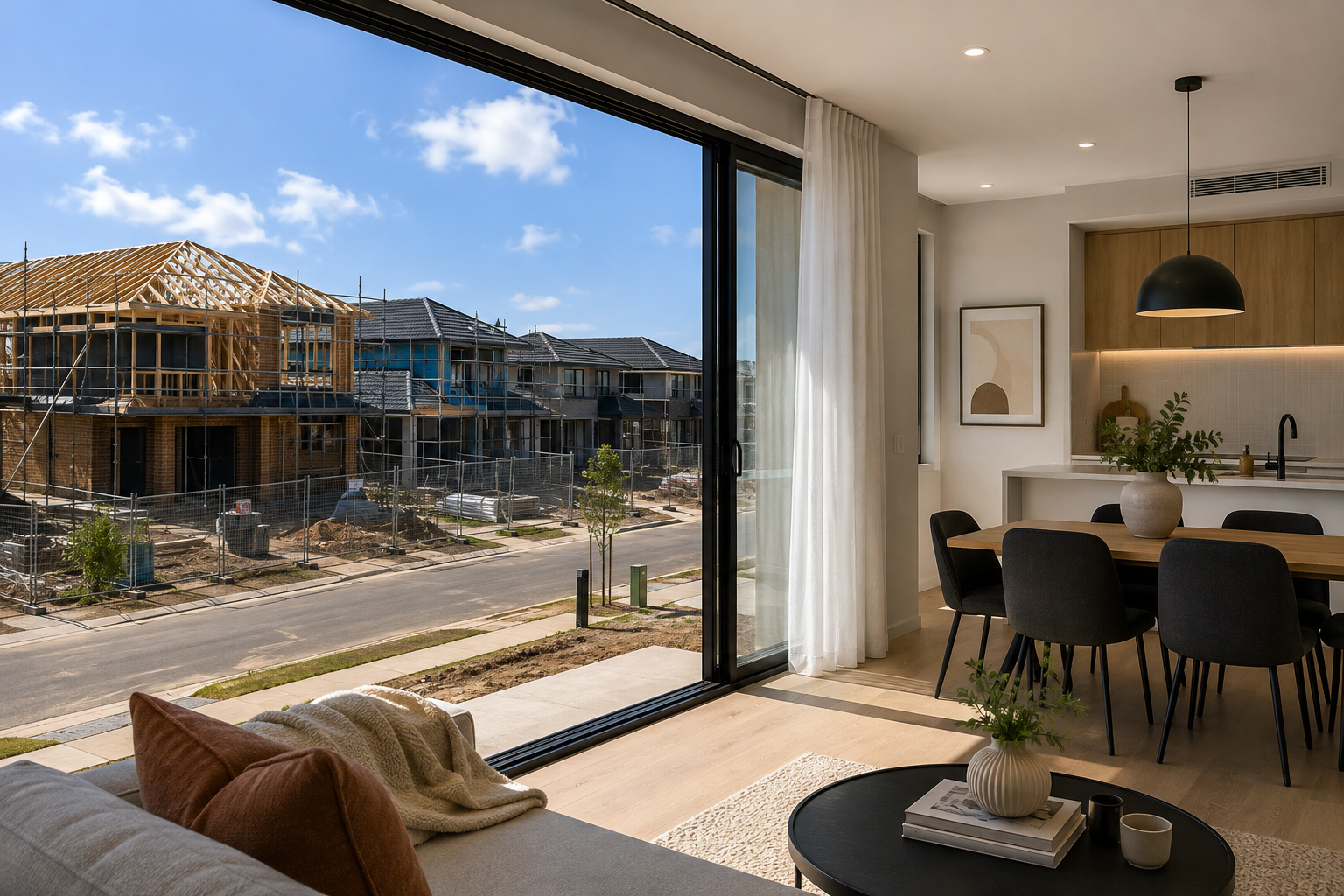
Buying a new home can feel more straightforward than competing for an established property. There may be a fixed contract price, a clear design, time to prepare before completion and, depending on the purchase, access to grants or duty concessions. But the finance side is not necessarily simpler - especially when interest rates and lending conditions are moving.
As at 31 August 2026, the Reserve Bank of Australia cash rate target is 4.35%, after three increases earlier this year. The RBA says financial conditions are now somewhat restrictive, while recent lending data show softer new home lending. For buyers considering a build or an off-the-plan property, one principle is especially important: test the finance against the position you are likely to be in at settlement or construction, not only the position you are in when you sign.
Start with borrowing capacity, not the display-home price
The advertised price of a new home is only one part of the decision. A lender will assess your income, existing debts, living expenses, deposit, credit history and the proposed property, then apply its own lending policy. APRA has kept the mortgage serviceability buffer at 3 percentage points, which means regulated lenders generally test a borrower's ability to manage repayments at an interest rate above the actual loan rate.
That buffer is designed for resilience, but it can also mean the amount a household feels comfortable repaying and the amount a lender is prepared to approve are not the same number. Before committing to land, a build contract or an off-the-plan purchase, it is worth understanding both: your lender-assessed borrowing capacity and your own preferred repayment ceiling.
Allow for the gap between contract price and final cost
New-build budgets can change. Site costs, upgrades, landscaping, window furnishings, fencing, driveways, variations, utility connections and other items may sit outside an initial headline price. With an off-the-plan purchase, the contract may be more fixed, but owners corporation costs, settlement adjustments and furnishing still need to be considered.
A useful finance plan therefore includes a cash buffer that is separate from the deposit. Using every available dollar to complete the purchase can leave very little room for the practical costs that arrive around settlement or completion.
Understand how the valuation can affect your finance
A lender does not simply lend against what you agreed to pay. Depending on the transaction, it may obtain a valuation and base the loan on the value it accepts under its policy. If the valuation is lower than expected, the buyer may need to contribute more cash, reduce the loan, restructure the transaction or reconsider the purchase.
This matters particularly when there is a long period between signing and settlement. Property conditions, comparable sales, lender policy and your own financial position can all change during that time. A finance approval obtained early in the process should not be treated as a permanent guarantee that the same amount will be available many months later.
If you are building, understand when the money is actually released
A construction loan is generally drawn progressively rather than advanced in one lump sum. Payments are typically made as agreed construction stages are completed and lender requirements are met. This can affect cash flow, interest costs and the timing of your own contribution.
For a detailed explanation of progress payments, construction stages and how a construction facility operates, please check Nestia's existing Construction Loans Explained Insight. This article has a different purpose: making sure the overall purchase decision remains financeable before you commit.
Do not assume today's rate will be your settlement rate
The RBA left the cash rate at 4.35% in August 2026 after raising it three times earlier in the year. Its August Statement on Monetary Policy says inflation remains too high and that the earlier rate increases are still working through the economy. No one can know with certainty where mortgage rates will be when a future build reaches completion or an off-the-plan property settles.
Rather than trying to predict one exact rate, buyers can plan around a range of repayment outcomes. A scenario that still feels manageable if rates are somewhat higher, income changes or costs increase is generally more useful than a budget that only works under the most optimistic assumptions.
Check the assistance that genuinely applies to your purchase
Government support can materially change upfront costs, but eligibility depends on the buyer and the property. Nationally, Australian Government home ownership support may help eligible buyers purchase with a lower deposit. In Victoria, eligible first home buyers may qualify for a $10,000 First Home Owner Grant when buying or building a new home valued up to $750,000, subject to current rules and occupancy requirements.
Victoria also has a temporary off-the-plan duty concession for eligible strata apartments and townhouses. The State Revenue Office currently states that the temporary concession applies to qualifying contracts entered into before 21 April 2027. These rules can change and the treatment of a particular transaction should be confirmed with the appropriate professional or authority before relying on a saving in your budget.
Treat pre-approval as a checkpoint, not the finish line
A pre-approval can be useful because it gives you an early indication of how a lender may view your application. But it is usually conditional, time-limited and subject to the lender's requirements when a full application is assessed. A change in employment, income, expenses, debts, credit conduct, interest rates, lender policy or the property itself can alter the outcome.
For a purchase with a long lead time, it can be sensible to review the finance position at several points: before signing, when key construction or settlement dates become clearer, and again before unconditional finance or settlement is required.
The goal is not to maximise the loan
A well-structured new-build purchase is not necessarily the one that reaches the highest possible borrowing limit. It is the one where the deposit, loan, cash buffer, expected repayments and timing work together without making the rest of your finances unnecessarily fragile.
That is particularly relevant in a higher-rate environment. The right question is not simply, 'How much can I borrow?' It is, 'What structure gives me enough room to complete the purchase and still feel comfortable once I move in?'
Before you sign
If you are considering land and build, a house-and-land package or an off-the-plan home, reviewing the finance early can help identify issues before they become contract problems. Nestia Financial can help you understand lender options, borrowing capacity and the structure of the finance in the context of your broader plans.
Planning a new build or off-the-plan purchase?
Book a discovery call with Nestia Financial to review the finance before you commit.
This article provides general information only and does not take into account your objectives, financial situation or needs. It is not financial, legal or tax advice. Lending criteria, interest rates, government schemes, grants and concessions can change. Before making a decision, consider whether the information is appropriate for your circumstances and obtain
