
First Home Buyer Schemes in 2026: Limits, Price Caps and Real-World Examples
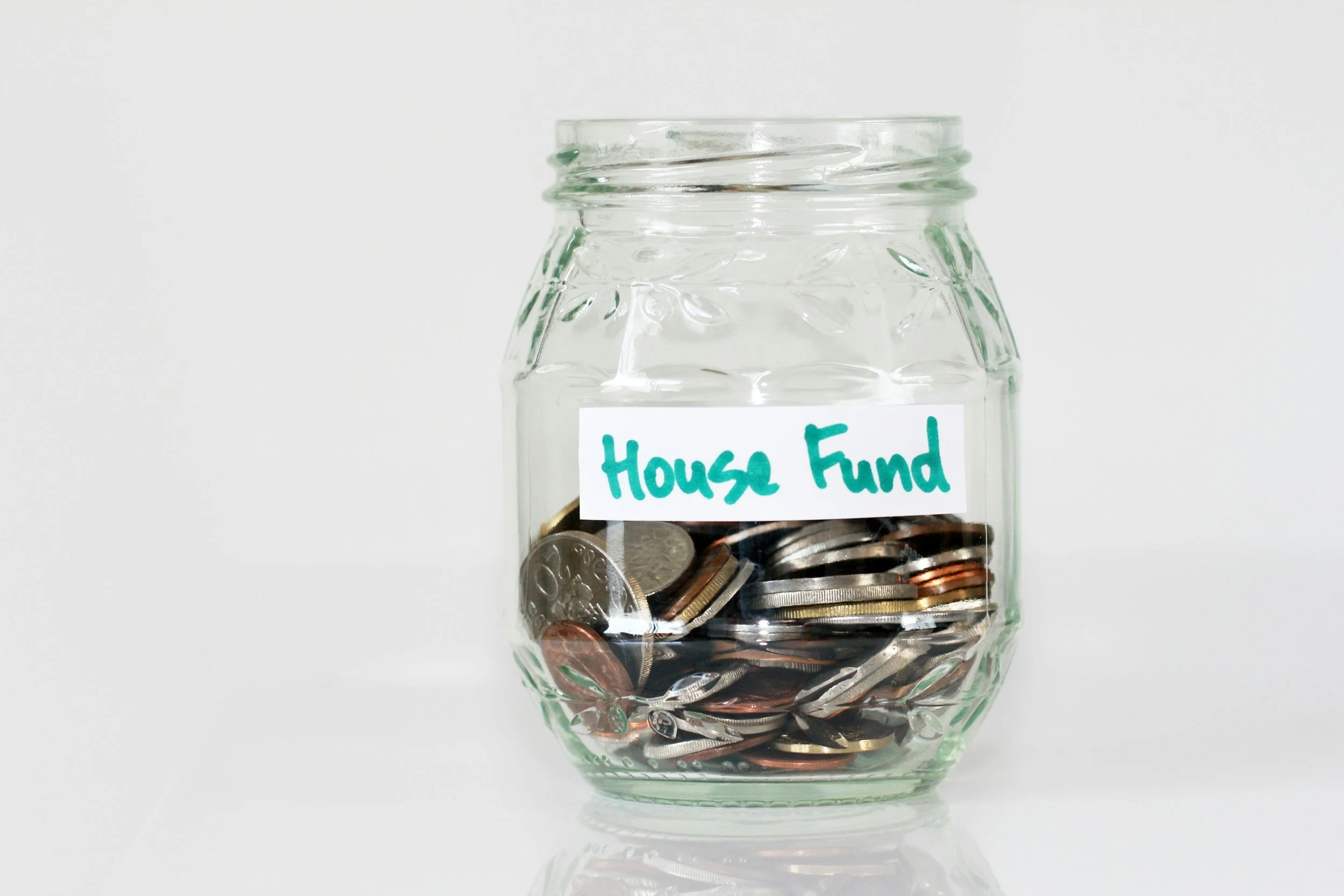
Government support can make a meaningful difference to a first home purchase, but the schemes are easy to confuse because they solve different problems. One may reduce stamp duty, another provides a cash grant, another helps a buyer purchase with a smaller deposit, while Help to Buy reduces the mortgage by giving the Australian Government an equity share in the property.
For Victorian buyers, the most useful way to compare the schemes is not simply by asking which one sounds most generous. It is to look at four things: the maximum property value or price cap, the minimum deposit, any income or ownership rules, and what the assistance actually does.
The examples below are illustrative scenarios rather than individual credit, tax or legal advice. They deliberately ignore some transaction costs so the mechanics of each scheme are easier to see.
At a glance: first home buyer support in Victoria
On smaller screens, swipe across to compare all columns.
| Scheme / incentive | Property limit | Deposit / benefit | Income cap | Key point |
|---|---|---|---|---|
| Victorian first home buyer duty relief | Full exemption: dutiable value ≤ $600,000. Concession: $600,001–$750,000. | Reduced or nil stamp duty. | No income cap. | New or established homes, or eligible vacant land. Owner-occupier rules apply. |
| Victorian First Home Owner Grant | Qualifying new home valued at ≤ $750,000. | $10,000 grant. | No income cap. | New homes only. First-home and residence requirements apply. |
| Australian Government 5% Deposit Scheme | Melbourne & Geelong: $950,000. Other Victorian areas: $650,000. | Minimum 5% deposit; no LMI under the Scheme. | No income cap. | Government guarantee to the lender; no Government equity share. |
| Help to Buy | Victorian capital city / regional centre: $950,000. Rest of state: $650,000. | Minimum 2% deposit; Government equity up to 30% for existing homes or 40% for new homes. | 2026–27: $103,000 single; $165,000 joint / single parent. Based on FY2026 taxable income. | Shared equity, with 10,000 places nationally each year. |
| First Home Super Saver | No property price cap under FHSS itself. | Eligible voluntary contributions: up to $15,000 per financial year; $50,000 total per person. | No FHSS income cap. | A deposit-saving mechanism, not a grant. Release amounts depend on contribution type and scheme rules. |
| 5% Deposit Scheme — Single Parent Stream | Melbourne & Geelong: $950,000. Other Victorian areas: $650,000. | Minimum 2% deposit; no LMI under the Scheme. | No income cap. | Eligible single parents / legal guardians; not necessarily first home buyers. |
| Victorian temporary off-the-plan concession | No property price threshold for an eligible temporary concession. | Eligible post-contract construction costs reduce dutiable value. | No income cap. | Eligible strata properties with common property. Contracts from 21 October 2024 to before 21 April 2027. |
1. Victorian first home buyer stamp duty exemption and concession
Eligible first home buyers purchasing in Victoria can receive a full land transfer duty exemption where the dutiable value is $600,000 or less. From $600,001 to $750,000, a concession applies on a sliding basis. Once the relevant dutiable value is above $750,000, this particular first home buyer duty benefit is no longer available.
The benefit can apply to an established home, a new home or eligible vacant land. The buyer must satisfy the first-home and principal-place-of-residence requirements. For vacant land, the dutiable value test relates to the land rather than automatically adding the separate building contract.
Real-world example: Mia buys an established unit
Purchase price / dutiable value: $590,000
Property: Established unit in Victoria
Deposit: $70,000
Scheme threshold: Full first-home-buyer duty exemption up to $600,000
How it could work: Mia is below the $600,000 threshold. Assuming she satisfies the eligibility and residence requirements, she could pay no Victorian land transfer duty under the first home buyer exemption. She does not receive the $10,000 FHOG because the unit is established, not new.
Nestia insight: This shows why the stamp duty benefit can still be valuable for a buyer who chooses an established property. The FHOG and stamp duty rules should not be treated as the same scheme.
2. Victorian First Home Owner Grant - $10,000
The Victorian First Home Owner Grant is a $10,000 payment for eligible first home buyers who buy or build a qualifying new home. The property must be worth no more than $750,000 and must satisfy the new-home and residence requirements.
There is no general income cap for the Victorian FHOG. The key restrictions are instead around first-home eligibility, the property being genuinely new, the $750,000 value limit and living in the property as the principal place of residence.
Real-world example: Daniel and Priya buy a new townhouse
Contract price: $720,000
Property: Brand-new townhouse, never previously occupied
Scheme limit: New home up to $750,000
Grant: $10,000
How it could work: Because the new townhouse is below the $750,000 FHOG cap, Daniel and Priya could receive the $10,000 grant if all other eligibility conditions are satisfied. Depending on the dutiable value and applicable concessions, they may also qualify for first home buyer stamp duty relief.
Nestia insight: A $10,000 grant is useful, but it should not be mistaken for an extra $10,000 of borrowing capacity. The lender still assesses the loan under its own credit policy.
3. Australian Government 5% Deposit Scheme
Under the Australian Government 5% Deposit Scheme, an eligible first home buyer can purchase with a minimum deposit of 5% of the property's lender-assessed value and avoid Lenders Mortgage Insurance under the Scheme. Since 1 October 2025 there are no income caps, no waitlists and unlimited places for eligible applicants.
For Victoria, the current property price cap is $950,000 in Melbourne and Geelong, and $650,000 in other Victorian areas. Both the purchase price and the lender-assessed property value must be at or below the relevant cap.
The Australian Government does not contribute cash or take an ownership share. It provides a guarantee to the participating lender. The buyer remains responsible for the mortgage and must still satisfy the lender's servicing and credit requirements.
Real-world example: Sophie buys in metropolitan Melbourne
Purchase price: $800,000
Location: Melbourne
Relevant price cap: $950,000
Minimum 5% deposit: $40,000
Indicative loan before other costs/adjustments: $760,000
How it could work: Sophie's $800,000 purchase is below the $950,000 Melbourne cap. If the lender also values the property at or above $800,000 and Sophie meets the Scheme and lender requirements, a $40,000 deposit represents 5%. The Government guarantee can allow the participating lender to provide the high-LVR loan without Sophie paying LMI under the Scheme.
Nestia insight: The scheme solves a deposit and LMI problem, not a servicing problem. Sophie still needs enough income to qualify for a loan of roughly $760,000, and she still needs funds for relevant purchase costs and a sensible post-settlement buffer.
4. Help to Buy - minimum 2% deposit with shared equity
Help to Buy is structurally different from the 5% Deposit Scheme. It is a shared-equity program. The buyer contributes at least 2% of the purchase price, obtains a participating-lender home loan, and the Australian Government can contribute up to 30% of an existing home's purchase price or up to 40% for a newly built home.
For FY2026, the published taxable income limits are $103,000 for a single applicant and $165,000 for joint applicants or a single-parent applicant. In Victoria, the property price caps are $950,000 for the capital city/regional-centre category and $650,000 for the rest of the state. There are 10,000 places nationally each year.
Because the Government owns a proportional equity interest, it shares proportionally in gains or losses when the home is sold or when the buyer buys out the Government's share. Help to Buy is therefore not simply a '2% deposit scheme'.
Real-world example: Alex buys an $800,000 established home
Purchase price: $800,000
Property: Existing home in Melbourne
Minimum 2% deposit: $16,000
Maximum Government share for existing home: 30% = up to $240,000
Indicative remaining amount to finance: $544,000 before costs/adjustments
How it could work: If Alex qualifies and receives the maximum 30% contribution, the basic purchase equation could be $16,000 from Alex + $240,000 from the Australian Government + approximately $544,000 from the home loan. That is very different from needing to borrow around $760,000 under a simple 5%-deposit structure.
Nestia insight: Help to Buy may materially reduce the required mortgage, but the trade-off is shared equity. A buyer should understand not only today's smaller loan, but also how the Government's percentage interest works if the property rises or falls in value.
Alternative new-home example
Purchase price: $800,000
Property: Qualifying newly built home
Minimum 2% deposit: $16,000
Maximum Government share for new home: 40% = up to $320,000
Indicative remaining amount to finance: $464,000 before costs/adjustments
How it could work: For a qualifying new home, the Government contribution can be up to 40%. At the maximum contribution, the mortgage requirement could therefore be substantially lower than for the same-priced existing home.
Nestia insight: The larger new-home contribution may look attractive, but the buyer still needs to consider whether the new property itself represents good value and whether the Help to Buy ownership obligations suit their long-term plans.
5. First Home Super Saver Scheme
The First Home Super Saver Scheme is a deposit-building strategy rather than a property-purchase subsidy. Eligible voluntary super contributions can count toward a future FHSS release. The current limits are up to $15,000 of eligible voluntary contributions from any one financial year and up to $50,000 of eligible contributions across all years, per person.
There is no FHSS property price cap. However, the amount ultimately released is not simply the gross amount contributed in every case. For example, only 85% of eligible concessional contributions is included in the releasable contribution component, together with calculated associated earnings. Contribution caps and tax rules also need to be considered.
Real-world example: Emma starts planning three years before buying
Year 1 eligible voluntary contribution: $15,000
Year 2 eligible voluntary contribution: $15,000
Year 3 eligible voluntary contribution: $15,000
Total eligible contributions counted toward FHSS limits: $45,000
Overall FHSS contribution limit: $50,000 per person
How it could work: Emma has used $45,000 of the $50,000 overall FHSS contribution limit. If these were concessional contributions, the releasable contribution component is generally 85% of the eligible concessional amount, plus the scheme's calculated associated earnings, rather than a simple $45,000 cash withdrawal.
Nestia insight: FHSS is most useful when planned before the purchase. It is not something a buyer should first investigate a few days before signing a contract. For couples, each eligible person has their own individual FHSS limits.
6. Single Parent Stream under the 5% Deposit Scheme
Eligible single parents or legal guardians can access the Australian Government 5% Deposit Scheme with a minimum deposit of 2%. There is no income cap and the applicant does not necessarily need to be a first home buyer, although they cannot retain another property interest once the new home settles under the applicable rules.
The Victorian property price caps are the same as the broader 5% Deposit Scheme: $950,000 for Melbourne and Geelong and $650,000 for other Victorian areas.
Real-world example: Rachel is a single parent buying in Melbourne
Purchase price: $700,000
Relevant Melbourne cap: $950,000
Minimum 2% deposit: $14,000
Indicative loan before costs/adjustments: $686,000
How it could work: Rachel's $700,000 purchase sits below the Melbourne cap. If she meets the Single Parent Stream rules and lender requirements, a $14,000 deposit represents 2% of the property's value. The Government guarantee can allow the participating lender to make the loan without LMI under the Scheme.
Nestia insight: A 2% deposit does not mean a low mortgage. In this simplified example, Rachel may still need to service roughly $686,000. That makes borrowing capacity and monthly repayment comfort especially important.
7. Victoria's temporary off-the-plan duty concession
Victoria currently has a temporary off-the-plan duty concession for eligible residential strata apartments, units and townhouses with common property. For qualifying contracts entered into on or after 21 October 2024 and before 21 April 2027, there is no property price threshold for this temporary concession.
The concession works by deducting eligible construction costs incurred after the contract date from the property's dutiable value. It is not exclusively a first home buyer benefit, but it can be particularly relevant to a first home buyer considering a new apartment or townhouse.
Real-world example: Liam buys an off-the-plan apartment
Contract price: $800,000
Eligible construction costs after contract date: Illustrative $500,000
Illustrative dutiable value after concession: $300,000
Temporary concession property price threshold: None for an eligible transaction
Contract timing: Must fall within the eligible temporary-concession period
How it could work: In this simplified example, if $500,000 of eligible construction costs can be deducted, the dutiable value could be reduced from $800,000 to $300,000 for general duty purposes. The actual calculation must come from the transaction documents and the SRO rules.
Nestia insight: This is a good example of why the headline contract price alone may not tell a first home buyer what duty will be payable on an off-the-plan purchase. Conveyancing advice and the vendor's construction-cost information are important.
Can the schemes be combined?
Some benefits can work together, while others cannot simply be stacked. For example, an eligible Victorian buyer of a qualifying new home may potentially receive the First Home Owner Grant and first home buyer stamp duty relief. The First Home Super Saver Scheme may also have been used earlier to help build the deposit.
Help to Buy has its own restrictions around combining shared-equity, loan or guarantee assistance. Buyers should not assume they can use Help to Buy and the Australian Government 5% Deposit Scheme on the same purchase. The current rules should be checked before a buyer builds their budget around a particular combination.
A realistic comparison
The same $800,000 Melbourne purchase
On smaller screens, swipe across to compare all columns.
| Pathway | Buyer contribution | Government role | Approx. mortgage before costs |
|---|---|---|---|
| Standard 20% deposit | $160,000 | None. | $640,000 |
| 5% Deposit Scheme | $40,000 | Guarantee to lender; no Government equity. | $760,000 |
| Help to Buy — existing home, maximum 30% | $16,000 minimum | Up to $240,000 in shared equity. | $544,000 |
| Help to Buy — new home, maximum 40% | $16,000 minimum | Up to $320,000 in shared equity. | $464,000 |
Illustrative examples only. Figures assume the stated deposit and, for Help to Buy, the maximum Government equity contribution. They exclude stamp duty, conveyancing, adjustments and other purchase costs. Lender valuations, eligibility and approval may affect the outcome.
These figures are deliberately simplified and exclude stamp duty, conveyancing, adjustments, lender valuation differences and other purchase costs. They illustrate why 'small deposit' does not always mean the same thing: the 5% Deposit Scheme leaves the buyer with a larger mortgage but full ownership, while Help to Buy can reduce the mortgage substantially in exchange for Government shared equity.
The most important question is: what is stopping you from buying?
If the problem is saving a large deposit, the 5% Deposit Scheme may be relevant. If the bigger constraint is borrowing capacity as well as the deposit, Help to Buy may create a very different equation. If the buyer already has sufficient deposit and borrowing capacity, stamp duty relief or the FHOG may simply reduce the cash required at settlement. If the purchase is still several years away, FHSS may be useful as part of the savings strategy.
The scheme with the lowest deposit is not automatically the best option. Buyers should compare ownership structure, mortgage size, repayments, transaction costs, future flexibility and the property itself before deciding how government support fits into the purchase.
Planning to buy your first home?
Nestia Financial can help you map your deposit, borrowing capacity and potential scheme eligibility, then compare suitable lending pathways so you understand not just what you may qualify for, but how each option could affect the size and structure of your home loan.
Compliance Disclaimer: This article provides general information and illustrative examples only. It does not take into account your objectives, financial situation or needs and is not financial, legal or tax advice. Scheme rules, income thresholds, property price caps, grants, concessions and lender policies can change. Example loan amounts exclude some transaction costs and assume the stated Government contribution or guarantee is available; actual outcomes may differ. Eligibility for a government scheme does not guarantee home-loan approval. Confirm current requirements with the relevant government authority and obtain professional advice where appropriate.
